

Drones and Radar Help Churchill Keep Polar Bears and People Apart
In Churchill, Manitoba, researchers are testing drones and radar to steer polar bears away from people, as a later and less predictable freeze-up makes bear encounters more likely.
- Location
- Churchill, on the southwestern shore of Hudson Bay, about 1,000 km north of Winnipeg
- Bear occurrences this season
- Nearly 300, according to the province; 15 bears captured and relocated or held
- Experiment
- Drone hazing for polar bears, run alongside communities in northern Ontario and Nunavut
- Partner
- Polar Bears International, which is also testing radar and cameras
Why Bear Management Is Pressing
Churchill sits on the migration route of one of the largest polar bear populations. Each autumn thousands of visitors come to watch bears gather on the Hudson Bay shore while they wait for the sea to freeze. Researchers say that the longer the bears are off the ice, the more likely they are to come into towns, and that climate change makes the freeze-up later and less predictable.
Drone Hazing
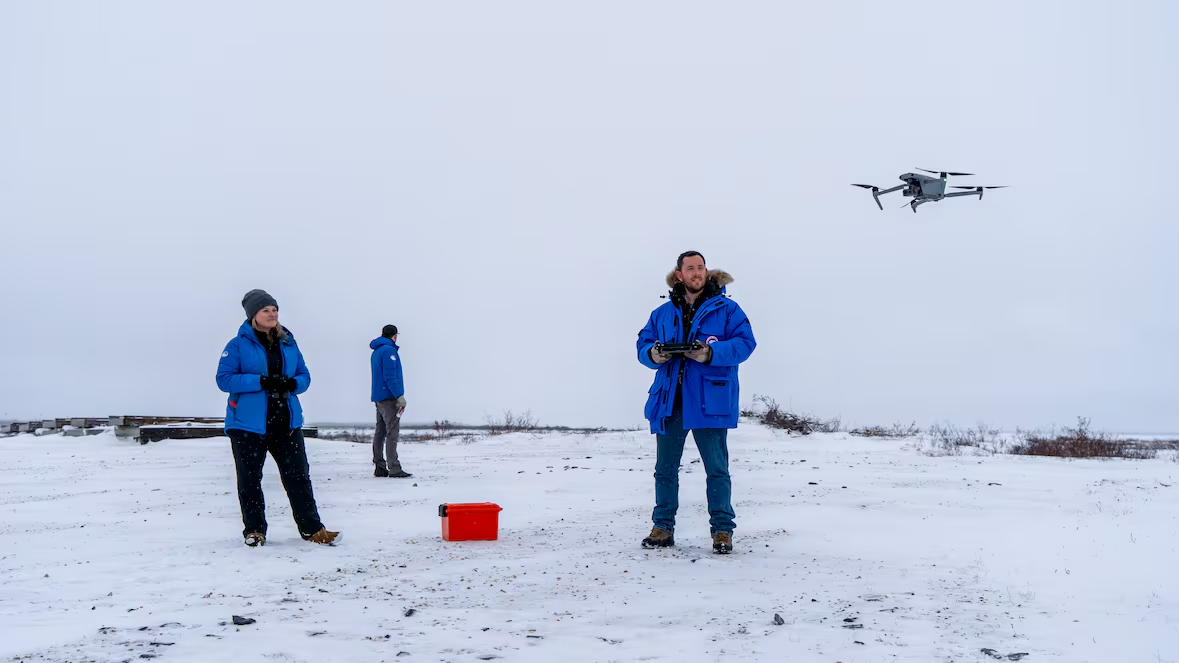
A master’s student from Brigham Young University is testing whether drones can scare polar bears away from areas where they might meet people. Drone hazing is already used with black bears. Polar bears are larger and more curious, so the researcher is testing whether the method works for them. In the field, the drone is kept close enough to make a bear uncomfortable but far enough away not to touch it. Bears typically walk away once they realise they do not like the noise. The longer-term hope is that a conservation officer could deter a bear from safe distance.
Radar and Cameras
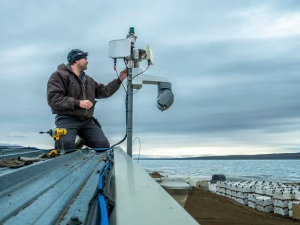
Polar Bears International is also experimenting with a radar system to track bears nearing town, and with mobile camera networks that can give conservation officers a view of problem areas. The town’s existing alert programme depends on public reports and officers’ sightings, and the technology aims to add to that.
Open Questions
Researchers still need to learn how well drones work in cold, rugged conditions. The bigger question is whether bears become used to drones if they are hazed often, which could make the method less effective over time. Early results are described as promising.
This summary is based on a CBC News feature published on 15 November 2026. Figures are as reported by the province and the researchers quoted, and the experiments are ongoing.